

Warrnambool Sewage Treatment Plant upgrade
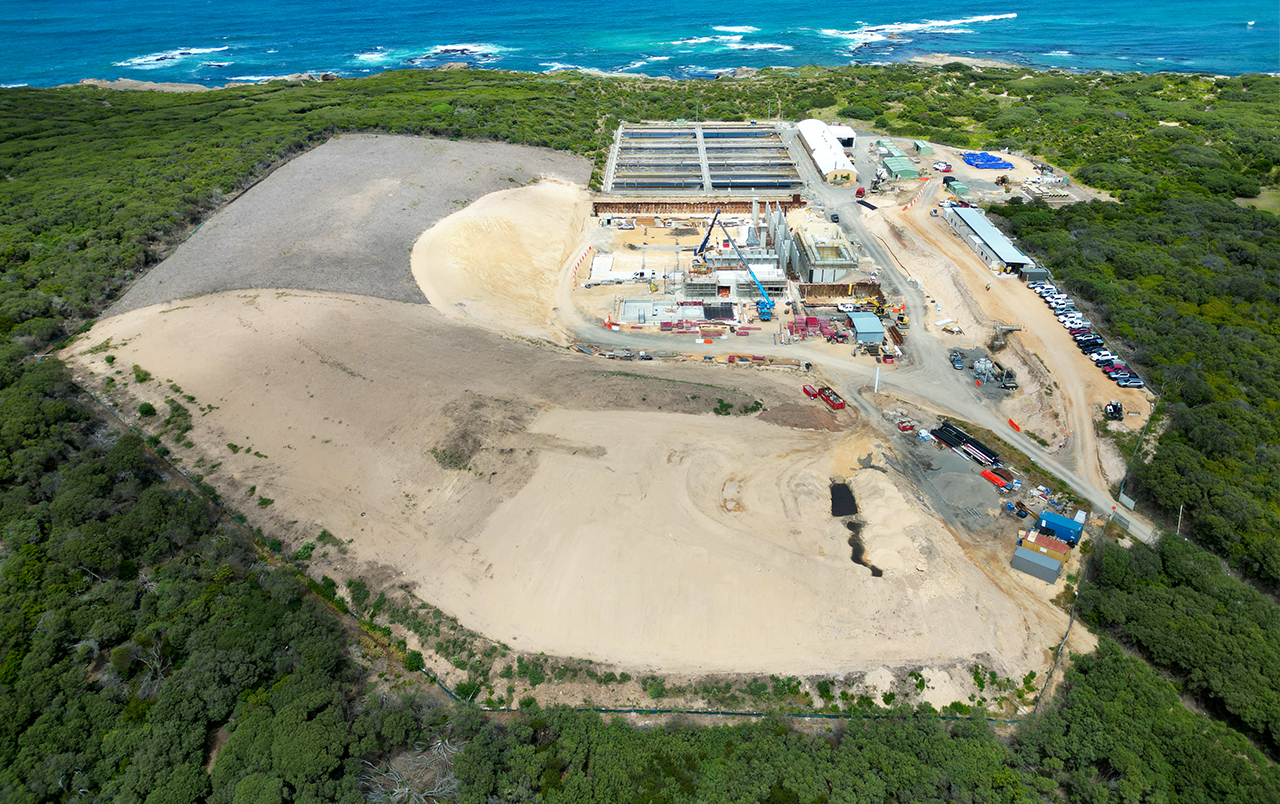
We’ve upgraded our Warrnambool Sewage Treatment Plant to meet the needs of housing and economic growth in the region. The $85 million project was our largest ever single infrastructure project and is now fully operational.


The issue
Our Warrnambool Sewage Treatment Plant services Warrnambool, Allansford and Koroit and had been operating near the limit of its treatment capacity. Around half the incoming flow (influent) to the plant is domestic sewage, while the other half is trade waste from local industries, creating unique challenges in treatment and operation.
The region’s importance as a food industry hub means that demands on the plant are much higher than would normally be expected based purely on population levels. Development in the area is expected to continue as a result of population growth and industry expansion. New housing estates are being established north, east and west of Warrnambool and infill development is occurring in established residential areas.
The detail
The upgrade is based on the proven technology of the existing plant. However, new treatment technologies, latest design principles and allowances for the future have been incorporated into the new structure.
The key components of the design include:
- A new influent pump station and screening facility.
- A septage receival system.
- Two new treatment tanks.
- A chemical dosing facility.
- An odour control facility.
- Tertiary effluent screening.
Commissioning of the two new treatment tanks, including ultra-violet (UV) disinfection, started in late January 2026 when sewage was diverted into the tanks to begin the biological treatment process.
The plant was fully operational in February 2026 and officially opened in March.
We’ll also be installing a UV disinfection system on the four original treatment tanks. This work should be completed in late 2026.
Rehabilitating the site
One of our priorities is to ensure the surrounding area on Thunder Point is returned to a state that protects its environmental values. This was important during the initial site clearing where we removed tonnes of contaminated material from the area. This contained heavy metal from the adjoining rifle target facility which had been abandoned many years earlier.
The large mound that’s been created along the east and north of the treatment plant will help to minimise visual impacts once the area is revegetated over the next few years.
Benefits
The upgrade ensures the plant has sufficient capacity for a projected increase in sewage volumes while continuing to protect public health and the environment. It also helps to secure the region’s future as a popular and attractive region for investment.
The upgrade provides additional capacity at the plant, allowing for an additional $199 million of annual economic value and 1,512 more jobs for the region by 2040.
The plant currently services nearly 15,000 houses – a figure expected to increase by more than 80 per cent to 25,000 properties in the next 50 years.
Managing effluent
Once the sewage and trade waste has been through the treatment process, it is then known as effluent. The huge majority of this liquid is discharged via an ocean outfall, with a minor amount re-used at the plant during screening.
In conjunction with the upgrade project, we’re preparing a new Effluent Management Strategy for the plant.
The strategy aims to consider the community’s long-term expectations and identify alternatives for the future disposal of effluent from the plant.
Options may include:
- Disinfection
- Recycling
- Tertiary treatment
- Optimising the existing ocean outfall design and location
- Retaining the existing outfall with additional treatment processes.
The strategy has been guided by a reference group of community representatives and agency stakeholders.
Warrnambool, Allansford and Koroit
Effluent Management Strategy


